
Future development areas to watch in Colombia
Future development areas to watch in Colombia
Colombia is undergoing a profound structural transformation in its real estate and infrastructure landscapes. Driven by multi-billion-dollar transportation corridors, shifting demographic preferences, an expanding agro-export industry, and a surge in international tourism, capital is migrating beyond traditional tier-one metropolises like Bogotá and Medellín into secondary markets and strategic rural corridors.
For forward-thinking investors, family offices, and developers, recognizing these emerging development zones early provides a decisive competitive advantage. The integration of Fourth and Fifth Generation (4G and 5G) highway networks has effectively redrawn the economic map of the country, compressing transit times between inland agricultural hubs, mountain retreats, and major export ports.
As local real estate marketing and advisory professionals with years of hands-on experience across the Colombian territory, we have analyzed the macro-trends, infrastructure investments, and demographic shifts shaping land values. This comprehensive analysis breaks down the top future development areas across Colombia, highlighting where real estate capital, agricultural expansion, and hospitality projects are poised for sustained long-term growth. Future development areas to watch in Colombia
1. The Macro Drivers Reshaping Colombian Land and Property Markets
Understanding where development is heading requires examining the underlying macroeconomic and structural forces driving expansion across the country.
The Impact of Infrastructure Infrastructure Compression
The completion of major 4G and 5G highway concessions—including the Pacifico 1, 2, and 3 networks, Autopista al Mar 1 and 2, and the Magdalena River corridors—represents one of the most significant infrastructure upgrades in South American history. Mountainous terrain that previously required four to six hours to traverse can now be navigated in under two hours via modern double-carriageway systems, viaducts, and mountain tunnels.
This enhanced connectivity produces a clear economic result: land that was once considered too isolated for commercial agriculture or residential development has transformed into prime real estate for eco-tourism, logistics, and specialty crop farming.
Expansion of Agro-Industrial Exports
Colombia’s agricultural sector continues to capture global market share, driven by increasing international demand for premium specialty arabica coffee, hass avocados, tahiti limes, and organic cacao. As global supply chains prioritize traceability and sustainable land management, farmland with ideal elevation, abundant natural water sources, and direct access to export highways is seeing rapid appreciation.
Decentralization of Tourism and Lifestyle Migration
While historic urban centers remain popular, international visitors, retirees, and remote professionals are increasingly seeking low-density, ecologically rich environments. Secondary towns that combine colonial architectural heritage, favorable microclimates, exceptional safety profiles, and proximity to major international airports are experiencing record inflows of domestic and international capital.
2. Southwestern Antioquia and the Jericó Heritage Corridor
Among all emerging regions in Colombia, Southwestern Antioquia stands out as the most compelling growth corridor for real estate capital. Centered around the iconic heritage town of Jericó, this region is experiencing a convergence of infrastructure improvements, cultural preservation, and agricultural expansion.
Medellín Industrial & Tech Hub
  │
  │ (Pacifico 1 Highway - Amagá Tunnels)
  ▼
Central Antioquia Logistics Hub
  │
  │ (Pacifico 2 Highway - Cauca River Corridor)
  ▼
Jericó & Southwestern Heritage Corridor (Agricultural, Tourism & Eco-Estates)
Strategic Infrastructure Integration
The completion of the Pacifico highway network has permanently connected Southwestern Antioquia to both the Aburrá Valley (Medellín) and the international port terminals of the Pacific coast in Buenaventura. Travel times from Medellín to Jericó have been significantly reduced, making the region highly accessible for weekend residents, international travelers, and agricultural transport fleets.
High-Yield Agricultural Acreage
The unique topographies of Jericó and neighboring municipalities feature volcanic soils, elevations ranging from 1,200 to 2,000 meters above sea level, and balanced annual rainfall. These factors create optimal microclimates for producing high-grade specialty coffee and export-quality avocado crops. Investors acquiring farmland in this corridor benefit from both agricultural revenue streams and natural land appreciation.
Eco-Tourism and Heritage Real Estate
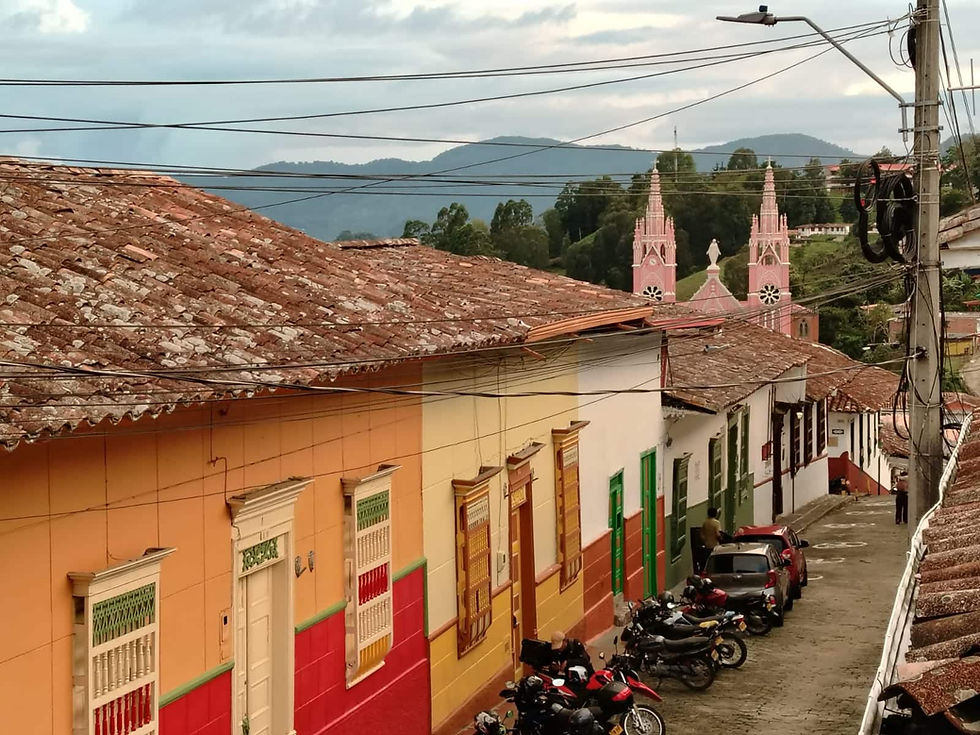
Jericó’s strict municipal preservation codes have preserved its colorful 19th-century colonial architecture, preventing high-density, disruptive construction and preserving its authentic character. As a result, demand for historic townhomes suitable for boutique hotel conversions, coffee estate retreats, and luxury eco-lodges has reached historic highs.
3. The Urabá Region and the Caribbean Port Axis
Located in northern Antioquia, the Urabá region is undergoing a massive industrial transformation that is reshaping trade dynamics across the entire country.
Puerto Antioquia and Logistics Infrastructure
The development of Puerto Antioquia in the Gulf of Urabá provides the interior of Colombia with its closest deep-water maritime outlet to both the Panama Canal and Atlantic trade routes. Connected via the Autopista al Mar 2, this project cuts transit times between inland manufacturing centers and Caribbean export terminals by up to thirty percent.
Emerging Real Estate Sectors in Urabá
Industrial and Logistics Parks: High demand for warehousing, cold storage facilities, and freight distribution centers near Necoclí, Apartadó, and Turbo.
Commercial Real Estate: Growth in retail space, business hotels, and corporate housing to support expanding port operations and logistics services.
Coastal Agro-Land: Expansion of large-scale banana, plantain, and timber plantations seeking proximity to maritime shipping terminals.
4. The Expanded Coffee Triangle (Eje Cafetero Extension)
While the traditional tri-city area of Pereira, Manizales, and Armenia has mature real estate markets, the growth edge has moved into surrounding rural districts and foothill municipalities.
Secondary Municipalities in Rise
Towns like Salento, Filandia, Pijao, and Santa Rosa de Cabal are seeing heavy investment in boutique hospitality, wellness resorts, and residential country estates. Furthermore, the expansion of international flights into Pereira's Matecaña International Airport has positioned the broader Coffee Triangle as a primary gateway for international visitors and expats.
Investment Trends in the Rural Coffee Axis
Subdivided Farm Estates (Fincas Campestres): High demand for multi-hectare residential parcels offering privacy, mountain views, and hobby farming capacity.
Agri-Tourism Venues: Experiential lodging properties integrated into working coffee, cacao, and botanical farms.
Regenerative Agriculture: Conversion of conventional cattle pastures into sustainable specialty crop systems and agroforestry projects.
5. The Eastern Plains (Los Llanos Orientales) and Agro-Industrial Horizons
Stretching eastward from the Andes toward the Orinoco River basin, the department of Meta and the broader Llanos Orientales represent Colombia’s vast agricultural frontier.
The Villavicencio-Yopal Infrastructure Axis
Upgrades to the Eastern Highway corridor connecting Villavicencio to Yopal have unlocked millions of hectares of arable flatlands. These infrastructure improvements have dramatically lowered freight costs for moving bulk agricultural commodities to Bogotá's primary consumption market.
Key Development Sectors in the Eastern Plains
Large-Scale Agro-Industry: Mechanized farming operations for palm oil, soybeans, rice, and commercial forestry.
Sustainable Livestock Production: Transition from traditional extensive grazing to intensive, silvopastoral livestock systems with higher animal densities per hectare.
Renewable Energy Farms: Solar power installations leveraging the high solar irradiance and flat terrain of the eastern plains.
6. The Upper Magdalena Valley and Alternative Lifestyle Corridors
Covering portions of Cundinamarca, Tolima, and Huila, the Upper Magdalena Valley offers warmer microclimates, thermal springs, and convenient access from the national capital.
Transit Upgrades Along the Magdalena River
The expansion of the Third Lane highway between Bogotá and Girardot, combined with improvements along the Neiva-Mocoa route, has enhanced connectivity for both freight transport and weekend tourism.
High-Growth Segments
Vacation Home Communities: Gated residential estates, golf communities, and retirement developments catering to upper-income residents from Bogotá.
Specialty Coffee Production in Huila: The department of Huila continues to earn international acclaim for producing competition-grade micro-lot coffees, attracting specialized agricultural land investors.
Eco-Tourism and Adventure Parks: Glamping operations, river-rafting bases, and wellness retreats centered around the Tatacoa Desert and natural thermal springs.
7. Comparative Framework for Future Development Areas
Evaluating different development zones requires matching investor objectives with local market characteristics, capital requirements, and projected investment horizons.
Growth Region | Primary Asset Classes | Target Investor Profile | Core Macro Catalysts |
Southwestern Antioquia (Jericó) | Specialty Coffee Farms, Heritage Homes, Eco-Lodges | Lifestyle Buyers, Agricultural Investors, Hospitality Developers | Pacifico Highway System, Heritage Tourism Demand, Specialty Crop Prices |
Urabá & Caribbean Port Axis | Logistics Parks, Commercial Warehousing, Industrial Land | Corporate Capital, Logistics Operators, Port Infrastructure Funds | Puerto Antioquia Construction, Autopista al Mar 2, Maritime Trade Shift |
Expanded Coffee Triangle | Boutique Hotels, Country Estates, Agro-Tourism Fincas | Lifestyle Investors, Retirees, Eco-Tourism Operators | Airport Expansions, Digital Nomad Inflows, International Tourism Growth |
Llanos Orientales (Meta/Casanare) | Large-Scale Farmland, Forestry Parcels, Renewable Energy Sites | Institutional Agro-Funds, Commercial Farmers, Energy Developers | Villavicencio-Yopal Highway, National Food Security Demand, Flat Terrain |
Upper Magdalena Valley | Vacation Properties, Specialty Coffee Lots, Retirement Communities | Domestic Vacation Buyers, Micro-Lot Coffee Producers | Bogotá Expressway Upgrades, Warm Microclimate, Proximity to Capital |
8. Navigating Land Acquisition and Regulatory Due Diligence
Investing in high-growth development areas requires meticulous legal review to protect capital and ensure long-term asset security. Rural land transactions in Colombia involve specific legal frameworks that differ from urban condominium purchases.
Essential Due Diligence Checklist
1. Thirty-Year Title Trace (Estudio de Títulos)
A comprehensive title search spanning at least three decades must be executed by an independent attorney. This step confirms that the property has an unbroken chain of legal ownership, is free of historical land restitution claims, and contains no hidden mortgages or legal disputes.
2. Land Use and Zoning Verification (POT / EOT)
Every municipality maintains a Plan de Ordenamiento Territorial (POT) or Esquema de Ordenamiento Territorial (EOT) that governs land use. Investors must verify:
Allowed building densities and coverage ratios for rural parcels.
Environmental buffer zones surrounding water sources, rivers, and natural forest reserves.
Agricultural versus commercial or residential zoning classifications.
3. Water Rights and Environmental Permitting
For agricultural holdings and hospitality developments, securing legal water concessions (concesión de aguas) from regional environmental authorities like Corantioquia or Cortolima is essential. A property must possess documented, legal access to natural water sources for irrigation and domestic usage.
4. Central Bank Investment Registration
All international funds transferred into Colombia for real estate purchases must be formally declared to the central bank, Banco de la República, via Formulario Dos. This registration protects your legal right to repatriate capital and generated profits back to your home country.
9. Elevating Real Estate Assets with Experienced Local Advisory
Capitalizing on emerging real estate markets requires more than just capital; it demands deep market knowledge, local community connections, and specialized execution capabilities. Relying on unverified brokers or informal property records can lead to costly delays and missed opportunities.
Our organization brings new perspectives, expert skills, and specialized teams to help businesses achieve greater returns across Antioquia. We provide comprehensive advisory, digital marketing, property sourcing, and legal oversight services tailored to international buyers, developers, and agricultural investors.
Our Comprehensive Real Estate Services Include:
Exclusive access to premier real estate listings, including architectural heritage properties, productive coffee farms, and rural development land in Jericó and Southwestern Antioquia.
Professional marketing and positioning services for property owners seeking to reach qualified global buyers.
End-to-end legal support, title verification, environmental compliance, and central bank foreign investment registration.
Strategic guidance on corporate entity formation (S.A.S.), property management, and agricultural operation oversight.
To explore the finest properties in Southwestern Antioquia and learn how our team can help you build and protect wealth in Colombia, visit our official portal at https://www.jericocolombiarealestate.com.
Conclusion
Colombia stands at a pivotal moment in its economic evolution. The completion of transformative infrastructure projects, coupled with global demand for specialty agricultural commodities and sustainable travel destinations, has opened unprecedented opportunities in emerging regions across the country.
While logistics hubs in Urabá and vast agricultural tracts in the Llanos Orientales offer substantial industrial potential, the Southwestern Antioquia corridor—anchored by Jericó—represents the premier destination for investors seeking a combination of land appreciation, agricultural yields, cultural heritage, and exceptional quality of life.
By conducting thorough legal due diligence, registering foreign capital in full compliance with central bank regulations, and partnering with experienced local advisors, international investors can confidently position themselves in Colombia’s highest-growth development areas for decades to come.
Frequently Asked Questions (FAQs)
1. What makes Southwestern Antioquia and Jericó top development areas in Colombia?
Southwestern Antioquia combines world-class highway infrastructure (Pacifico 1, 2, and 3) with ideal agricultural microclimates, a preserved colonial heritage center, and strong eco-tourism demand. This unique combination drives sustained capital growth across agricultural, residential, and hospitality real estate.
2. How do new 4G and 5G highways impact real estate values in rural Colombia?
Modern double-carriageway highways and tunnels drastically reduce travel times between agricultural regions, small towns, and major economic hubs or international ports. This improved accessibility lowers transport costs for farm produce, boosts tourism, and converts once-isolated rural land into prime development real estate.
3. Can foreigners legally buy agricultural land and farms in Colombia?
Yes. Foreign nationals enjoy the exact same legal rights to own land in Colombia as native citizens. There are no restrictions on foreign individuals or corporations purchasing rural farmland, coffee estates, or commercial real estate.
4. What legal steps are necessary when buying rural property in Colombia?
Key legal steps include conducting a thirty-year title search (Estudio de Títulos) to confirm clear ownership, verifying municipal land-use zoning (EOT/POT), securing legal water rights from regional environmental agencies, signing a public deed before a notary, and registering the foreign investment with Banco de la República.
5. Why is Jericó considered a premier destination for heritage and eco-tourism real estate?
Jericó features exceptionally preserved 19th-century colonial architecture, strict local historic preservation laws, a temperate mountain climate, and a thriving coffee culture. These factors create high demand for boutique hotels, coffee estate retreats, and luxury country homes.
6. What role does Puerto Antioquia play in the economic development of northern Colombia?
Puerto Antioquia is a deep-water port under construction in the Gulf of Urabá that will significantly shorten shipping distances between interior manufacturing centers and Atlantic trade routes. It is driving immense demand for logistics parks, commercial real estate, and industrial warehousing in the surrounding region.
7. How does registering foreign investment protect international buyers in Colombia?
Filing official exchange declarations (Formulario Dos) with Banco de la República when transferring funds into Colombia establishes legal proof of capital entry. This registration guarantees your legal right to repatriate your capital and accumulated profits back to your home country upon selling the property, while also supporting investor visa applications.
Discover Premier Real Estate Opportunities in Jericó and Antioquia
Whether you are searching for historic architectural properties, productive coffee farms, or private mountain estates, our specialized team is ready to guide you. Explore our curated listings and connect with our expert team today at https://www.jericocolombiarealestate.com.


