Estate Planning for Foreign-Owned Colombia Properties

Estate Planning for Foreign-Owned Colombia Properties
Colombia has established itself as one of the most compelling destinations in South America for real estate investment. From the vibrant urban centers of Medellin and Bogota to the pristine countryside of Antioquia, international buyers are acquiring everything from luxury city apartments to fertile agricultural land. Yet, while purchasing property in Colombia is straightforward for non-residents, ensuring that those assets seamlessly pass to heirs requires foresight, strategic planning, and a deep understanding of Colombian legal frameworks.
Foreign investors who acquire real estate in Colombia often assume that a home country will, trust, or probate judgment will automatically govern their Colombian assets. In reality, Colombian property is strictly subject to Colombian real estate and inheritance law. Without a clear estate strategy, heirs can face lengthy probate procedures, unexpected tax burdens, forced heirship rules, and bureaucratic complications.
This comprehensive guide examines the legal mechanisms, tax implications, corporate structures, and practical steps necessary to structure an estate plan for Colombian property owned by foreign nationals, ensuring your investment remains protected for future generations. Estate Planning for Foreign-Owned Colombia Properties
Understanding the Basics of Colombian Property and Estate Law
To navigate estate planning in Colombia, one must first recognize that the Colombian legal system operates under civil law, derived from Roman-French legal traditions. This fundamental framework differs significantly from common law jurisdictions like the United States, Canada, the United Kingdom, and Australia.
Under civil law, real estate located within Colombian borders is governed by the Lex Loci Rei Sitae principle. This principle dictates that any real property is subject to the laws of the country where the property is situated, regardless of the nationality, residency, or domicile of the property owner. Consequently, when a foreign national passes away owning real estate in Colombia, Colombian law governs the inheritance process of that specific property.
For foreign buyers investing in countryside estates, coffee fincas, or residential property across Antioquia, understanding this principle is essential from the day of purchase.
Forced Heirship and Legal Succession Rules
One of the most critical differences between civil law and common law systems is the concept of forced heirship. In many common law countries, property owners possess broad testamentary freedom, allowing them to leave their assets to anyone they choose through a simple last will and testament. In Colombia, testamentary freedom is regulated by the Civil Code.
Colombian law establishes a statutory system of mandatory beneficiaries known as Assignatarios Forzosos. Under these rules, heirs are categorized into legal orders of priority:
First Order: Children and descendants.
Second Order: Parents and ascendants, along with the surviving spouse or legal partner.
Third Order: Siblings and the surviving spouse or legal partner.
Fourth Order: Nephews and nieces.
Fifth Order: The Colombian Institute of Family Welfare.
Historically, Colombian law reserved up to three-quarters of an estate for forced heirs. Following legislative reforms under Law 1934 of 2018, property owners now enjoy greater flexibility, but mandatory allocations remain. Under current regulations:
Fifty percent of the estate is strictly reserved for legitimarios, which includes children and descendants, or parents if no children exist. This portion is known as the Legitima.
Fifty percent of the estate, known as the Libre Disposicion, can be freely designated to any individual or entity through a valid will.
For foreign property owners, forced heirship rules mean that a will drafted in your home country attempting to disinherit a child or leave one hundred percent of a Colombian property to a friend or charity may be challenged and declared unenforceable regarding the Colombian asset.
Marital Property Regimes and De Facto Marital Unions
Estate planning cannot be separated from matrimonial property law. In Colombia, marriage automatically creates a marital community property regime known as the Sociedad Conjugal, unless a prenuptial agreement, known as Capitulaciones Matrimoniales, is executed prior to the marriage.
Under the Sociedad Conjugal, all real estate and assets acquired during the marriage by either spouse generally belong equally to both spouses. Upon the death of one spouse, the marital partnership must first be liquidated. Fifty percent of the community property is immediately allocated to the surviving spouse as their share of marital assets, not as an inheritance. The remaining fifty percent forms the deceased spouse's estate and is distributed among the legal heirs according to inheritance rules.
Furthermore, Colombia legally recognizes de facto marital unions, known as Union Marital de Hecho, between unmarried partners who have cohabited for more than two consecutive years. These unions generate an economic entity called the Sociedad Patrimonial, which provides rights similar to those of a married spouse upon death or separation.
Foreign investors purchasing real estate while married or in a long-term relationship should carefully consider how title is registered and whether premarital or property agreements should be recognized under Colombian law.
Direct Personal Ownership Versus Corporate Structuring
When acquiring real estate in Colombia, foreign investors generally choose between two primary ownership structures: direct personal ownership or holding property through a entity.
Direct Personal Ownership
Under direct ownership, the foreign individual holds the public deed, known as the Escritura Publica, in their own name.
Advantages:
Simplicity in initial setup and lower ongoing administrative costs.
Direct eligibility for foreign investment registration with the Banco de la Republica, which can support applications for Colombian residency visas.
Disadvantages:
Upon death, the property must go through a formal Colombian succession process before ownership can be transferred to heirs.
The estate is directly exposed to Colombian forced heirship rules and probate costs.
Corporate Ownership Structures
Foreign investors often elect to hold Colombian real estate through a local corporate entity, most commonly a Simplified Stock Company, known as a Sociedad por Acciones Simplificada or SAS. Alternatively, property can be held by a foreign entity, such as a foreign limited liability company or trust, which in turn owns a Colombian SAS.
Advantages of a SAS Structure:
Asset Transfer Flexibility: Instead of transferring physical real estate upon death, ownership is transferred by transferring shares of the Colombian company.
Streamlined Estate Administration: Shares of a company can be owned by a foreign entity or held under structured corporate governance agreements, potentially avoiding personal probate proceedings in Colombia.
Multiple Investor Integration: A SAS allows multiple family members or co-investors to hold clear percentage ownership through shares, making inheritance allocation simpler.
Disadvantages of a SAS Structure:
Increased Accounting Requirements: A Colombian SAS must maintain formal corporate accounting, file annual tax returns, pay annual commerce registration fees, and comply with corporate reporting standards.
Tax Considerations: Transferring real estate into a corporation, or selling property out of a corporate structure, involves specific tax treatment regarding capital gains and corporate income taxes.
The Role of Foreign Trusts and Foundations
Many foreign investors utilize living trusts, family trusts, or private foundations in their home countries to manage estate affairs. A common question is whether a foreign trust can directly own property in Colombia.
Colombia does not natively recognize the legal concept of a common law trust in the same manner as English or American law. While Colombia has its own commercial trust mechanism, known as a Fideicomercio Mercantil, foreign trusts are treated under Colombian tax and property law as foreign transparent or non-transparent entities depending on their structure.
If a foreign trust directly owns property in Colombia, the trust must register with the Colombian tax authority, known as DIAN, obtain a tax identification number, known as a RUT, and name a local legal representative. In many cases, a more effective structure involves having the foreign trust own one hundred percent of the shares in a Colombian SAS, which then holds title to the real estate. This creates a clean layer of separation, ensuring local compliance while allowing the foreign trust document to govern share distribution upon death.
Will Execution and Probate Procedures in Colombia
When a foreign property owner passes away holding direct ownership of Colombian property, the estate must undergo a succession proceeding, known as Proceso de Sucesion.
Types of Succession Proceedings
Mutual Consent Succession (Succession Notarial): If all legal heirs are in full agreement, are legally competent, and there are no disputes regarding asset division, the succession can be conducted swiftly before a Colombian Public Notary. This process requires a licensed Colombian attorney acting under a power of attorney granted by the heirs. Notarial successions typically take between two to four months to complete.
Judicial Succession (Succession Judicial): If there are disagreements among heirs, missing beneficiaries, disputed claims, or invalid testamentary documents, the matter must be presented before a Colombian family judge. Judicial succession is a lengthier judicial proceeding that can extend for months or years.
Validating Foreign Wills in Colombia
If the deceased left a foreign will, that document does not automatically carry legal effect in Colombia. To be recognized by a Colombian notary or judge, a foreign will must undergo a specific legalization workflow:
Authentication: The foreign will and foreign probate decrees must be legalized or apostilled in the country of issuance according to the Hague Apostille Convention.
Official Translation: The apostilled documents must be translated into Spanish by a certified official translator licensed in Colombia.
Exequatur Procedure: If a foreign court judgment is involved, a formal validation process before the High Court of Colombia may be required to confirm that the foreign judgment does not violate Colombian public order or mandatory statutory rights.
Drafting a Local Colombian Will
To eliminate the delay and complexity of translating and legalizing foreign estate documents, foreign property owners can execute a separate Colombian will specifically dedicated to their assets located in Colombia.
Under the Colombian Civil Code, a formal public will, known as Testamento Abierto, is executed before a Public Notary and three witnesses. The testator outlines instructions for the distribution of their Colombian real estate within the limits permitted by law. Having a clear, locally registered Colombian will significantly accelerates the Notarial Succession process upon death.
Tax Implications of Inheriting Property in Colombia
Inheriting real estate in Colombia triggers specific tax obligations for both resident and non-resident heirs. Understanding these tax liabilities is essential for effective estate planning.
Gain and Inheritance Tax (Impuesto de Ganancias Ocasionales)
In Colombia, inheritances, gifts, and legacies are classified as occasional gains (ganancias ocasionales).
Tax Rate: Inheritances received by individuals are subject to a flat occasional gains tax rate established by national tax reforms.
Exempt Amount: Colombian tax law provides a basic tax-exempt threshold for inheritances received by direct line descendants and spouses. Value exceeding the statutory exemption is taxed at the applicable rate.
Property Valuation Base: The taxable value of real estate inherited in Colombia is determined by the official tax value, known as the Avaluo Catastral, or the registered cost base in the deceased's final tax return, whichever is higher.
Foreign Tax Considerations and Double Taxation
Foreign heirs must also evaluate how inheriting Colombian real estate impacts their tax filings in their home jurisdiction. Countries such as the United States tax worldwide income and estate assets of their citizens and green card holders.
While Colombia has entered into Double Taxation Avoidance Agreements with several countries, foreign property owners must consult with cross-border tax specialists to ensure foreign tax credits are appropriately claimed for any income or capital gains taxes paid to DIAN.
Foreign Capital Registration and Transfer of Funds
A critical aspect of property acquisition and estate planning in Colombia is the correct registration of foreign investment capital.
When a foreign buyer imports funds into Colombia to acquire real estate, the transaction must be registered with the Banco de la Republica as a direct foreign investment under Foreign Investment Form Number 4 or through approved foreign exchange intermediaries.
Proper capital registration achieves several crucial goals:
Guarantees the legal right to repatriate sale proceeds or income back to the investor's home country.
Enables heirs who inherit the property to lawfully register as successor international investors.
Provides transparent proof of purchase capital to DIAN, preventing unjust capital gains claims upon sale or transfer.
If foreign funds were brought into Colombia informally without proper central bank registration, heirs will face significant hurdles when attempting to liquidate the asset and transfer the proceeds overseas.
Practical Estate Planning Steps for Foreign Owners
To ensure your Colombian real estate is fully protected and easily transferable to your designated beneficiaries, implement the following practical measures:
Step 1: Conduct a Title and Registry Audit
Review the certificate of title, known as the Certificado de Tradicion y Libertad, for every property owned. Confirm that the registered owner details, national identification or passport numbers, and marital status match your legal identity documents.
Step 2: Formalize Foreign Investment Registration
Verify that all funds used to purchase property, complete renovations, or make capital investments were properly declared to the Banco de la Republica. Maintain safe records of all bank confirmation forms and official receipts.
Step 3: Evaluate Corporate Holding Structures
If you own multiple properties, commercial real estate, or agricultural estates, consult with Colombian corporate legal advisors to determine if transferring assets into a Colombian SAS provides superior estate management flexibility.
Step 4: Execute a Dedicated Colombian Will
Work with an experienced Colombian legal advisor to draft a Testamento Abierto that clearly addresses your Colombian assets while remaining aligned with forced heirship laws. Ensure the local will complements, rather than contradicts, your global estate plan.
Step 5: Consolidate Property Documentation
Maintain a physical and digital record containing property deeds, tax receipts, utility contracts, central bank registration forms, corporate certificates, and legal contacts. Provide your named executor or trusted family members with secure access to these files.
Investing in Countryside Real Estate and Coffee Estates
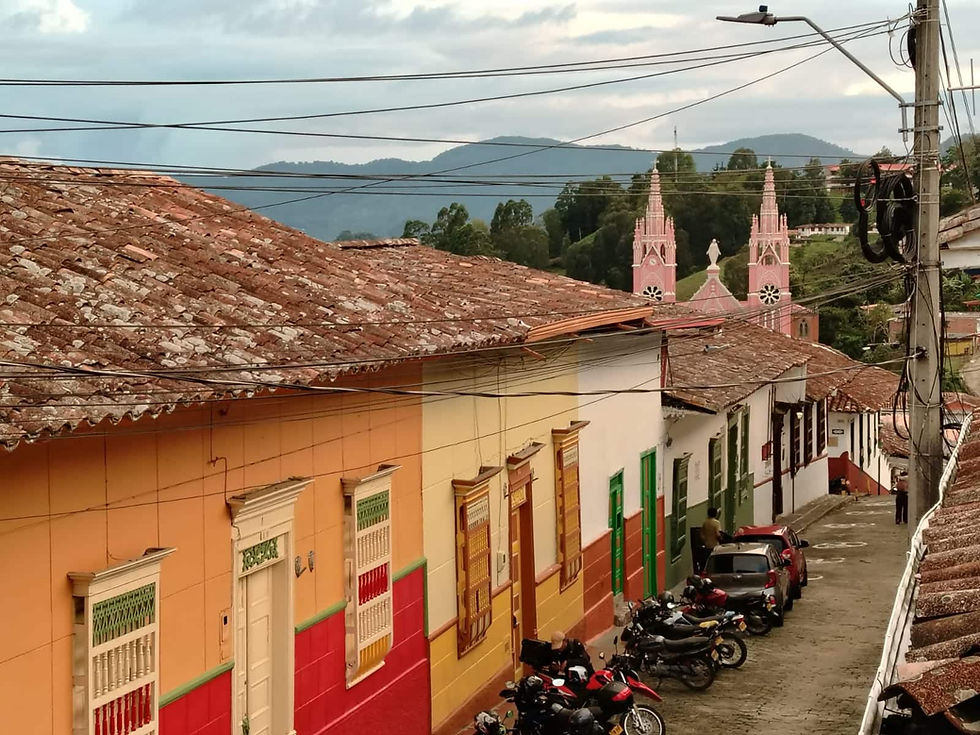
Colombia's countryside offers exceptional opportunities for international investors seeking unique land acquisitions. Across southwestern Antioquia, the picturesque municipality of Jerico has emerged as a premier destination for buyers interested in historic architecture, fertile agricultural land, and peaceful mountain retreats.
When acquiring agricultural properties, coffee estates, or rural fincas, estate planning requires additional attention. Rural properties often involve water access rights, agricultural labor contracts, land usage boundaries, and environmental management requirements. Structuring rural land ownership cleanly ensures that management transitions smoothly to heirs without disrupting ongoing agricultural operations or community relations.
Our team brings deep local knowledge and specialized guidance to real estate transactions across southwestern Antioquia. If you are looking for #FarmsForSaleInColombia, pristine #ColombianCoffeeFarmsForSale, or prime #ColombianLandForSale, we offer complete guidance from property selection through final title transfer. Whether your search centers on #CoffeeFarmsForSaleColombia, a traditional #CoffeeFarmForSaleColombia, #CoffeeFarmsInColombiaForSale, or a beautiful #FincaForSaleColombia, our expertise ensures a seamless investment experience.
We provide clients access to premier opportunities, offering specialized teams, new perspectives, and expert skills to help businesses achieve greater returns. Explore our portfolio of exceptional properties and discover why buyers trust us when choosing to #InvestInColombia, explore #InvestInColombiaRealEstate, or complete process for #BuyingPropertyInColombia.
To discover exclusive listings in Jerico and across Antioquia, visit https://www.jericocolombiarealestate.com.
Conclusion
Estate planning for foreign-owned properties in Colombia is an essential responsibility that safeguards your financial legacy and protects your heirs from unnecessary administrative and legal burdens. Because Colombian real estate is strictly subject to Colombian civil law, forced heirship rules, and local tax regulations, relying solely on foreign wills or informal arrangements leaves your assets vulnerable.
By combining proper central bank investment registration, appropriate corporate ownership structures, and a locally executed Colombian will, foreign property owners can establish a secure, compliant framework. Taking these proactive steps ensures that your investment in Colombia remains a source of pride, prosperity, and lasting value for generations to come.
Frequently Asked Questions (FAQs)
Does a foreign will cover real estate located in Colombia?
A foreign will can theoretically be recognized in Colombia, but it requires an extensive, time-consuming legalization process involving apostilles, certified official translations into Spanish, and potential validation through Colombian courts. To avoid significant delays, it is strongly recommended to execute a separate Colombian public will specifically covering assets located in Colombia.
What are forced heirship rules in Colombia?
Forced heirship rules are mandatory statutory allocations under the Colombian Civil Code that dictate how an estate must be distributed. Fifty percent of the estate is strictly reserved for mandatory heirs, such as children or parents. The remaining fifty percent can be freely bequeathed to any person or entity designated in a valid will.
Can a foreign trust directly hold title to property in Colombia?
While a foreign trust can legally own assets, Colombia does not natively utilize common law trusts. A common and efficient strategy is for the foreign trust to own shares in a Colombian company, such as a Sociedad por Acciones Simplificada, which then holds title to the real estate. This allows smooth share management under trust documents while maintaining full compliance with Colombian property law.
What taxes apply when an heir inherits real estate in Colombia?
Inherited real estate is subject to the occasional gains tax (Impuesto de Ganancias Ocasionales). The tax is calculated based on the taxable value of the inherited asset above statutory exemptions. Heirs must also evaluate cross-border tax rules in their home countries to utilize double taxation relief mechanisms where available.
What is a Sociedad por Acciones Simplificada, and why is it used for real estate?
A Sociedad por Acciones Simplificada is a flexible Colombian corporate entity similar to a limited liability company. Foreign investors frequently use a SAS to hold property because ownership can be transferred by assigning company shares rather than re-registering physical property deeds upon death, offering greater administrative efficiency.
What happens if foreign money used to buy property was not registered with the central bank?
If foreign funds imported into Colombia were not registered with the Banco de la Republica, the owner and their heirs may encounter serious difficulties when trying to legally repatriate sale proceeds or rental income back overseas. Foreign investment capital should always be registered at the time of purchase using the official currency exchange procedures.
How long does a probate or succession process take in Colombia?
If all heirs are in full agreement and proceed through a Public Notary, a succession process typically takes between two to four months. However, if there are disputes among heirs or missing documentation requiring judicial court intervention, the process can take considerably longer.